
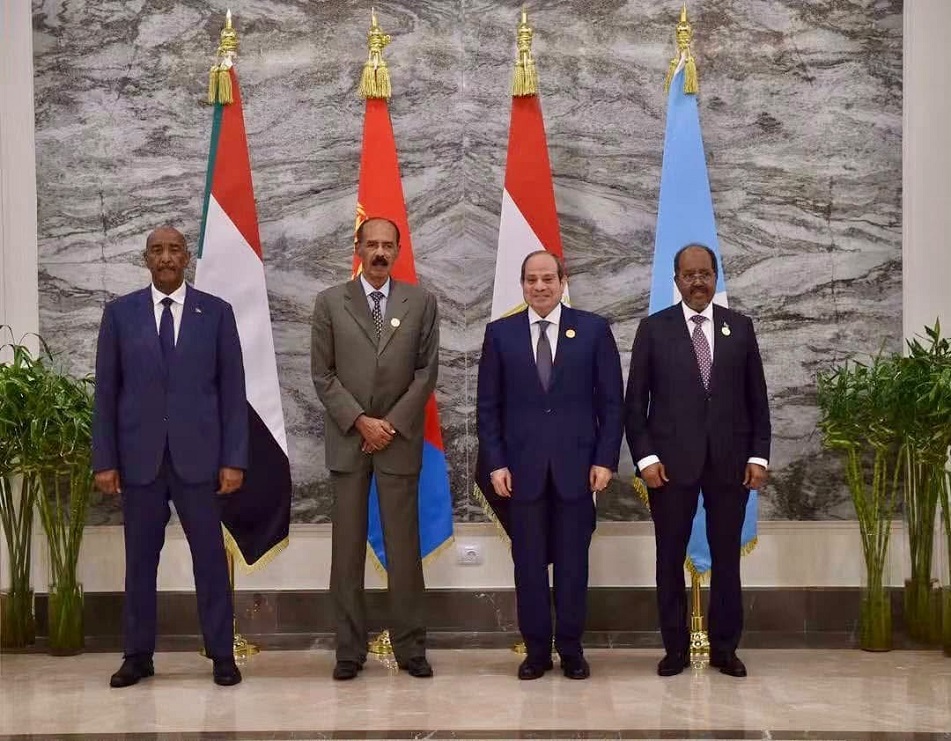
The leaders of Egypt, Somalia, Sudan, and Eritrea have issued the Alamein Joint Declaration, establishing a unified four-nation front to assert exclusive sovereignty over Red Sea governance, defend the territorial integrity of member states, and categorically reject any unilateral measures affecting the Nile River.
Meeting in New Alamein City on October 4, Egyptian President Abdel Fattah Al-Sisi, Eritrean President Isaias Afwerki, Somali President Hassan Sheikh Mohamud, and Sudanese Transitional Sovereignty Council Chairman General Abdel Fattah al-Burhan agreed to establish a periodic joint mechanism to coordinate regional security. The quadripartite summit outlined a cohesive stance on Horn of Africa flashpoints, emphasising that Red Sea governance remains the exclusive responsibility of littoral states, whilst underscoring the necessity of ensuring the freedom and safety of international navigation in the Gulf of Aden and the Bab-el-Mandeb strait.
Regarding transboundary rivers, particularly the Nile, the declaration emphasised the necessity of adhering to international law and the principle of no harm. The summit mandated cooperation through prior notification, consultation, and consensus, stating a complete rejection of any unilateral measures that harm the existing water uses of the Nile’s downstream states.
Addressing the situation in Somalia, the declaration affirmed absolute support for the federal republic’s unity and explicitly rejected any interference targeting its sovereignty. The leaders stated they refuse any recognition or support for the so-called Somaliland, deeming it a direct violation of Somalia’s territorial integrity. They backed Mogadishu’s counter-terrorism efforts and called on international partners to provide sufficient, predictable, and sustainable funding for the African Union Support and Stabilization Mission in Somalia (AUSSOM) to facilitate the orderly transfer of security responsibilities to Somali forces.
On Sudan, the four nations pledged support for the country’s unity, sovereignty, and national institutions, whilst rejecting the establishment of any parallel entities and expressing total refusal of any support for mercenaries. The leaders encouraged the resumption of a Sudanese-owned and Sudanese-led political process.
Egyptian Presidency Spokesperson Ambassador Mohamed El-Shenawy stated that al-Sisi outlined Egypt’s efforts to achieve ceasefires and comprehensive political settlements. Al-Sisi warned against foreign interventions that prolong conflicts and exacerbate human suffering, stressing that attempts to undermine state unity are explicit violations of international law, the United Nations Charter, and the Constitutive Act of the African Union. He reaffirmed Egypt’s continued support for national institutions in confronting security challenges, notably terrorism.
The leaders also discussed ongoing economic and development cooperation projects, exploring ways to enhance regional integration in infrastructure, energy, and trade. The summit concluded with the visiting presidents expressing their appreciation for Egypt’s role in supporting continental stability and its policy based on African solidarity, dialogue, and the peaceful settlement of disputes.
Dailynewsegypt.